The release of Apertus under the Apache 2.0 license underlines that the model, weights, code, and training data documentation are open. The Usage Policy recommends regular updates and indemnifies the Swiss AI Initiative, but there are few technical constraints on the type of usage or precise setup of the model. The actual user experience and behavior of the model can differ quite starkly between providers.
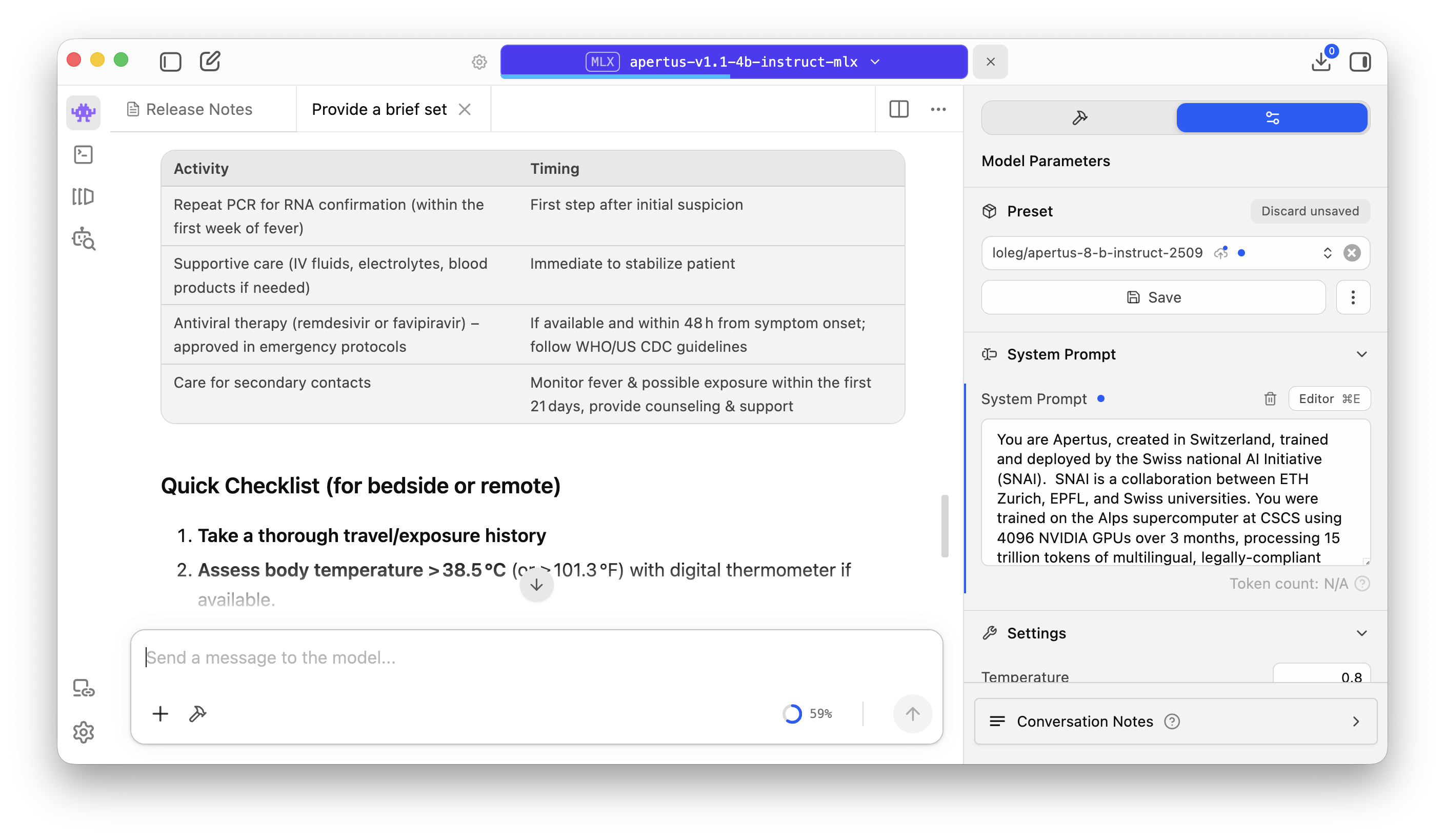
The image attached shows a screenshot of LM Studio: a third-party software product for working with LLMs. Here it is in the process of loading the Apertus model, with a System Prompt visible in a side panel.
As one of the key parameters of a deployment of the model, the System Prompt is recommended in Appendix P of the Apertus Technical Report[1]. This document explicitly identifies the AI as "Apertus", and refers to the core principles of the Swiss AI Charter[2]: support for human independence, clear boundaries between assistance and overreach, ultimate human control, and service to intended purposes without developing separate interests.
This self-identification mechanism is intended to enhance transparency for end users, allowing them to recognize the AI system they interact with. However, it is crucial to note that the installation and enforcement of the System Prompt fall under the responsibility of inference providers. Without proper deployment by these providers, the intended benefits—such as user awareness and alignment with the model developers values—may not be realized.
How can we ensure that our recommendations, in terms of technical and ethical guidelines, are followed? Indeed, such tools can be part of a strategy to foster reuse of best practices across engineering teams or the global research community. The System Prompt is a simple mechanism which is often overlooked in the discussion of LLM capabilities, yet is widely used as both a guardrail against misuse - as well as form of collaborative exchange with a user community. It could even be used to ensure that users become stakeholders, who better understand how the governance structure influences the development and deployment of a model, aligning with the Apertus project's overarching goal of democratic principles and long-term societal benefit.
One example of how this is promoted on a platform level, is the lmstudio website[3]. Similarly to the model card on Hugging Face, providers can create an official profile, and configure a preset for "one-click" deployment of a model with recommended settings. In the future, these could be used as mechanisms to provide regular updates on the technical parameters and governance model, consortium agreements or legal changes.
The Swiss AI Initiative and the Apertus ecosystem exemplify how collaborative academic efforts can produce impactful AI solutions. By maintaining open communication about governance and institutional collaboration, we are paving the way for a model that is not only technologically advanced, but also ethically grounded and interpretable. The system prompt serves as a practical bridge between the AI system and its users, while the role of inference providers ensures that the system’s identity and values are transparently explained and realized.
Comments
Sign in to join the conversation.
Sign in to commentNo comments yet.